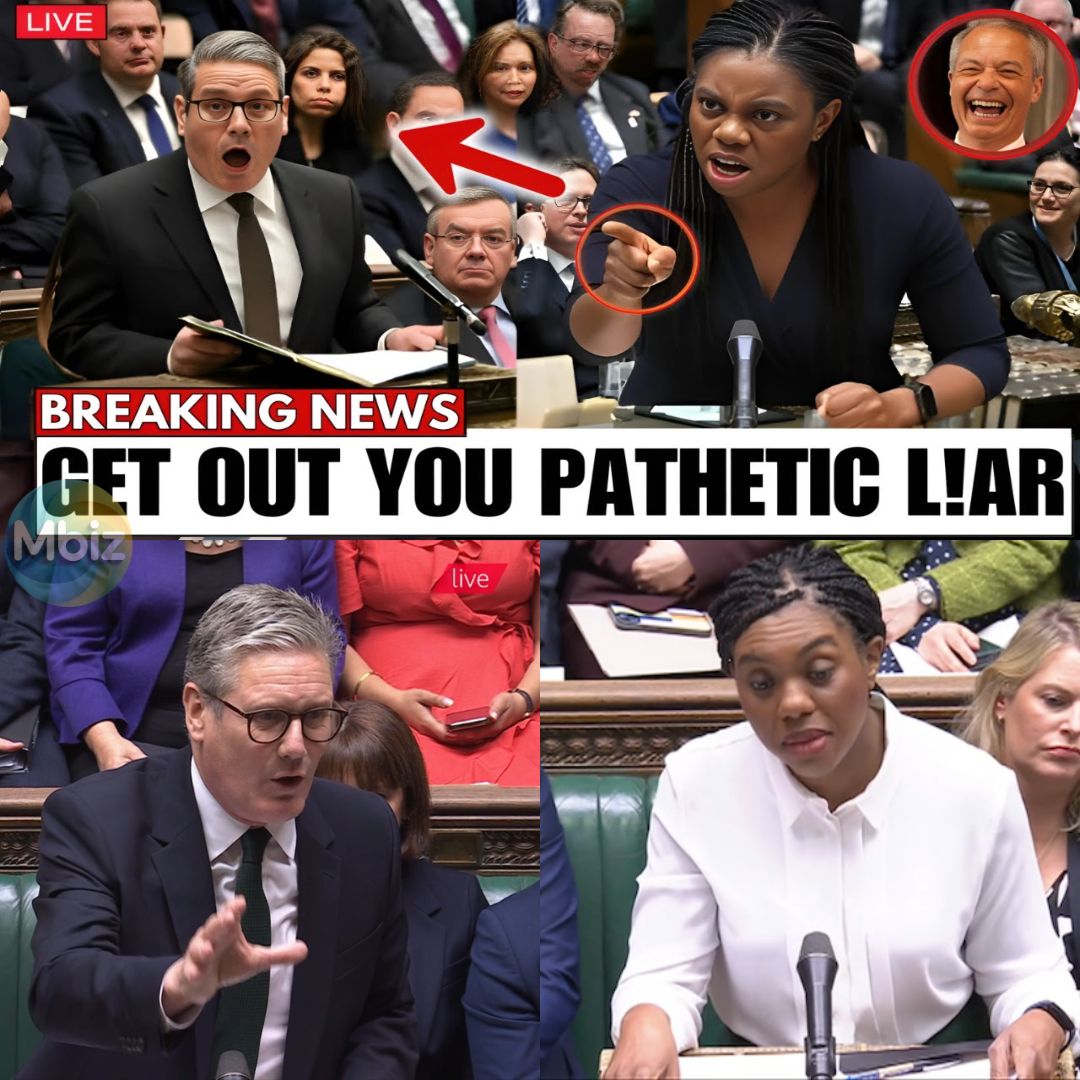
A storm erupted within the hallowed halls of Parliament today as Keir Starmer, leader of the opposition, faced an intense grilling over a controversial new deal with the European Union. The Prime Minister’s assurances were met with fierce criticism, accusations of betrayal, and explosive debate that laid bare deep divisions in British politics.
 At the heart of the turmoil lies a freshly announced agreement that ostensibly revisits the UK-EU Trade and Cooperation Agreement established in 2020. Intended as a renegotiation to improve terms for Britain, this new deal has ignited fury among opposition voices, accusing the government of surrendering critical national interests.
Starmer’s detractors blasted the deal as a catastrophic failure that sells out Britain’s sovereignty, cripples key industries, and undermines border security. The fishing industry, in particular, emerged as a battleground, with claims that the government surrendered precious access rights to the EU until 2038, leaving fishermen “locked out” and abandoned.
The opposition spotlighted this as emblematic of a broader pattern — British farmers now face paying the EU while losing influence, agricultural regulations dictated from Paris and Brussels, and energy policies shackled to EU schemes, potentially driving costs upward and dismantling freshly negotiated trade deals elsewhere.
Moreover, star campaign pledges by the Prime Minister himself appeared to unravel under scrutiny. Promises to remain outside the single market and avoid new EU payments were described as “short-lived” and hollow, raising profound questions about government accountability and transparency.
 Economic realities loom large in the accusations. Critics say the deal undermines jobs, businesses, and border control. The claim that this is a “deal made for Labour’s PR, not Britain” struck a chord in the House, with warnings of far-reaching political fallout and public disillusionment.
Defenders of the deal hit back hard in today’s tense exchanges. Government spokespeople touted the agreement’s benefits: streamlined procedures easing food and agricultural trade, enhanced defense cooperation enhancing security, and tariff reductions saving British businesses millions each year.
They stressed that this deal opens doors previously shut, citing backing from major supermarkets and business groups applauding the removal of bureaucratic barriers, claiming the agreement represents a win for British industry and workers alike.
Addressing specific concerns, government supporters highlighted that no fishing rights had been lost and that the deal maintained reciprocal arrangements as before. The new SPS agreement was framed as a permanent breakthrough facilitating seafood exports to the EU’s vast market.

On immigration, the controversial youth mobility scheme was defended as controlled, capped, and balanced — a measured approach to managing labor flow and experience opportunities, countering criticism of unchecked migration increases.
Energy policy defenders underscored existing EU connectivity and the benefits of tariff abolition for steel exports. They argued that fears over emissions trading scheme constraints overlook current realities and the deal’s wider trade advantages.
Tensions climaxed as opposition voices lambasted the government for selective endorsements and accused the Prime Minister of spin and obfuscation, warning that citizens are already seeing the harsh consequences unfold despite official optimism.
 The heated debate showcased a Parliament deeply divided, grappling with the complexities of post-Brexit reality. The deal’s nuances and long-term impacts remain fiercely contested ground as politicians weigh short-term headlines against enduring national interests.
This clash signals more than a mere parliamentary squabble; it reflects seismic political fault lines within the UK, with Labour’s internal unity and Conservative credibility both at risk amid growing public scrutiny.
As the political drama unfolds, all eyes remain fixed on Westminster, where the ramifications of this EU deal will reverberate far beyond today’s fiery exchanges, shaping Britain’s trajectory on the global stage.
In a climate charged with distrust and discord, one thing is clear: the row over this EU agreement is just beginning. The battle for Britain’s post-Brexit future promises to be as intense and unpredictable as the explosive Prime Minister’s Questions just witnessed.
We will continue to monitor every development and bring you the latest from the eye of this political storm as the nation demands answers and accountability from its leaders.


