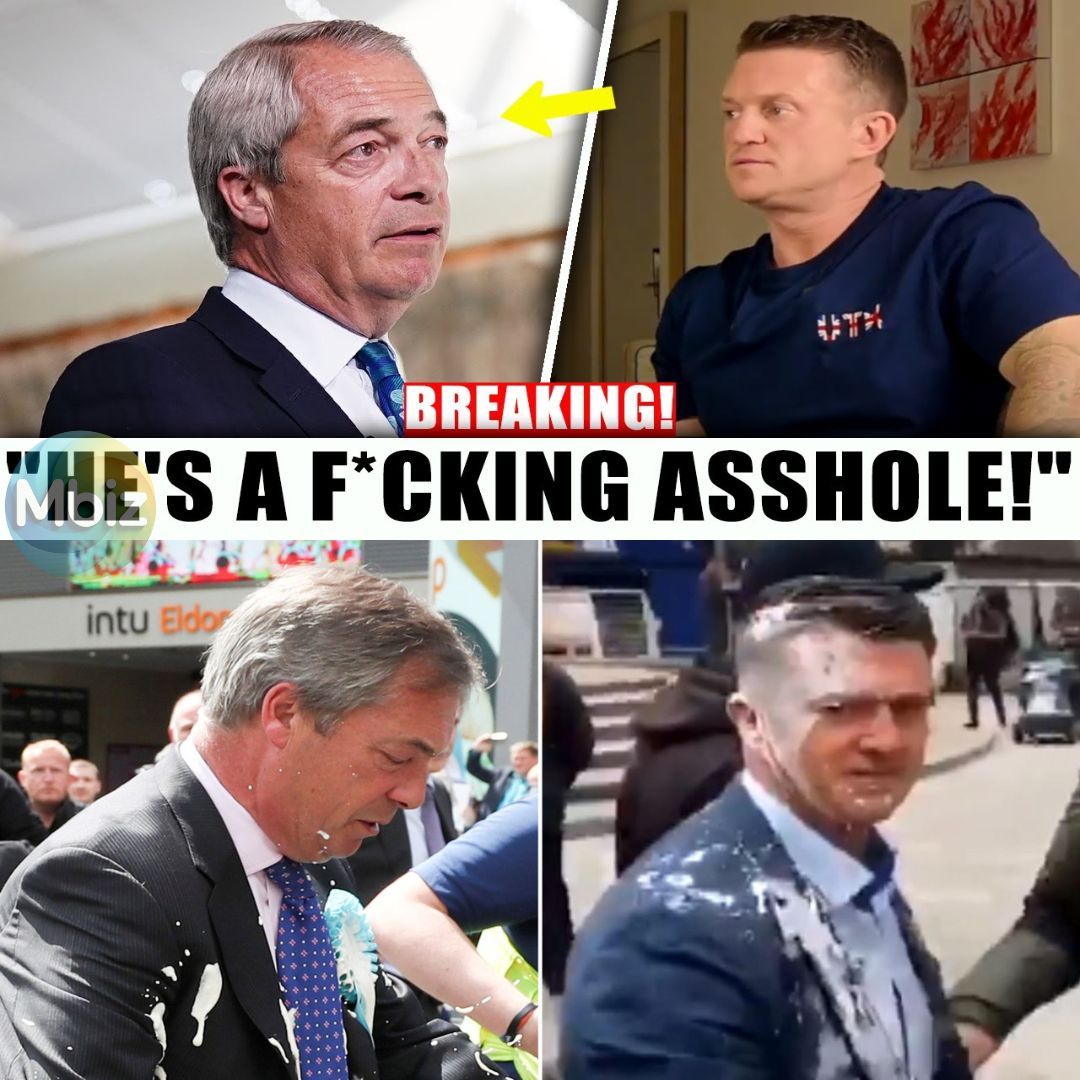
In a blistering public confrontation, Tommy Robinson has launched a devastating attack on Nigel Farage, exposing deep fissures within the British right-wing populist movement. Robinson’s explosive allegations unveil a tale of betrayal, opportunism, and fractured alliances that are rocking the political landscape to its core.
 Robinson, a divisive figure known for his fierce anti-establishment stance, did not hold back. Speaking with biting clarity, he accused Farage of actively working against him while he was imprisoned, claiming the former UKIP leader did more than anyone else to discredit his efforts to regain freedom. This revelation shatters the carefully maintained image of unity among Britain’s populist right.
The accusation strikes at the heart of a once-tentative alliance. Farage, who morphs between populist champion and mainstream media darling, has long walked a tightrope between insurgent politics and establishment acceptance. Robinson’s condemnation drags Farage into a harsh spotlight, exposing his readiness to abandon allies for his own political survival.
 Farage’s treatment of Robinson speaks volumes about the fragility of populist alliances under pressure. While Robinson faced prison over filming outside a grooming gang trial courthouse—a move his supporters hailed as courageous free speech—Farage reportedly denounced him on national television, labeling him a liability. This public disavowal is viewed by many as a strategic retreat, a cold calculation to preserve Farage’s public image.
The rupture between the two men mirrors a broader global trend: right-wing figures harness populist rage only until it threatens their standing. Farage’s critics argue he embodies the opportunist politician, quick to leverage fiery anti-establishment energy but equally swift to discard it when inconvenient.
The backlash against Farage is intensified by contrasting public attitudes toward his associates convicted of crimes. When confronted with inquiries about individuals with criminal backgrounds in his political orbit, Farage advocated “Christian forgiveness,” defending their second chance. Yet when questioned about Robinson’s criminal record, Farage’s silence and Robinson’s scathing retort highlight a glaring double standard.
 Despite Farage’s historical provocations — including controversial stances on immigration and confrontational political theater — his distancing from Robinson is viewed as political expediency. This posture exposes contradictions that undermine Farage’s insurgent credentials and question the integrity of his leadership.
Adding fuel to the fire, Robinson calls out Farage’s media appearances as evidence of being out of touch with the populist base. His critique paints Farage as a man who has succumbed to establishment comforts, prioritizing media respectability over grassroots loyalty.

Meanwhile, as the political row festers, fresh fallout unfolds amid a separate national crisis. Over 400 illegal migrants crossed the Channel while the UK’s French enforcement deal, funded with nearly half a billion pounds, appears impotent. Critics slam the arrangement as a farce — British taxpayers allegedly bankrolling French inaction.
Home Secretary Cooper’s recent extension of the French contract has sparked outrage. With record migrant arrivals unabated, calls grow louder for Britain to enforce tougher unilateral measures. The stark reality: British shores face a relentless influx while diplomatic agreements fail spectacularly.
Locals and politicians alike demand decisive action, condemning the current strategy as a costly failure. One frustrated MP criticized the government for “paying France to do nothing,” heightening pressure on ministers to take matters into their own hands.

The migrant crisis and the Farage-Robinson split together symbolize the turmoil gripping Britain’s political and social fabric. They expose chasms not only between leaders but also between promises and realities, between political rhetoric and public discontent.
As Tommy Robinson strips away the veneer surrounding Nigel Farage’s leadership, questions intensify about the future direction of the populist right. Will these revelations fracture the movement beyond repair or catalyze a reckoning that reshapes political alliances?
The urgency of this saga cannot be overstated. With the UK facing escalating societal challenges and political infighting spilling into public view, the stakes for leadership integrity and national stability have never been higher.
This is an unfolding story, a raw exposé that demands immediate attention — the fault lines of British populism laid bare in a brutal takedown that could redefine the nation’s political contours. Readers are urged to watch closely as developments continue to unfold at a blistering pace.